







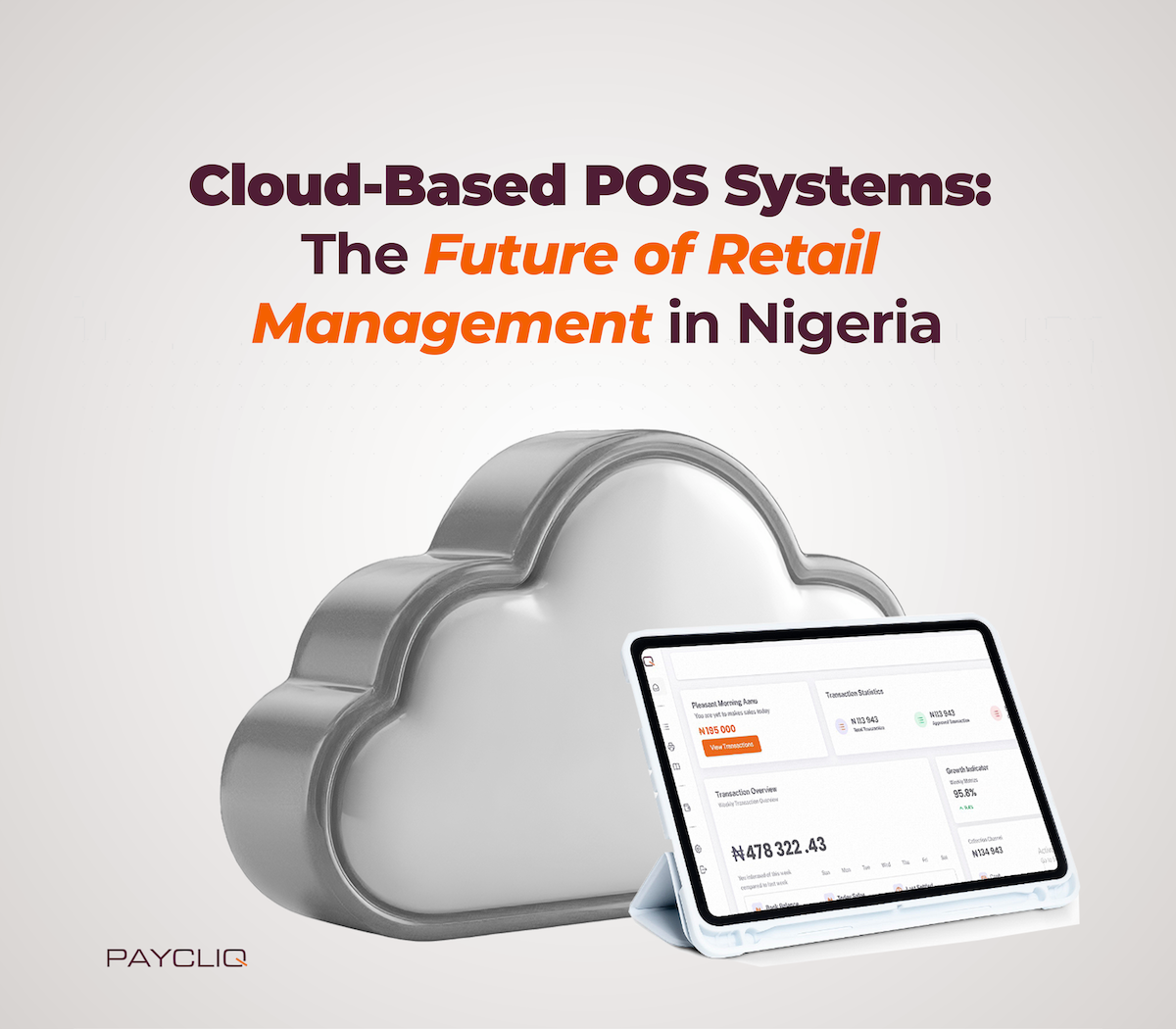



As a business owner in Nigeria, you have probably experienced the frustration of traditional cash registers or outdated POS systems. You can lose sales records, get confused about inventory, have end-of-day reconciliation headaches, and have the constant fear of what happens if your computer crashes with all your data.
A better way to run your business is with a cloud-based POS system. Instead of storing all your business data on a single computer that could crash at any moment, everything lives securely on the internet. You can access your sales, inventory, and reports from anywhere with an internet connection.
This post explores why cloud-based POS is the future of retail in Nigeria, its benefits, and how to choose the right system for your needs.
What Exactly is a Cloud-Based POS System?
A cloud-based POS (Point of Sale) system is software that manages your sales, inventory, and customer data. Instead of running on a single computer in your store, it runs on remote servers accessed over the internet.
Traditional POS systems keep all your important documents in one filing cabinet in your shop. If the cabinet gets damaged, everything is lost. If you’re not physically in the shop, you can’t access those documents.
Cloud-based POS is like storing those documents in a secure online vault. You can access them from anywhere, they’re automatically backed up, and even if anything happens to your shop, your business data remains safe.
Why Cloud POS is Perfect for the Nigerian Market
Nigeria’s retail industry faces unique challenges, and cloud-based POS systems directly address many of them.
1. Access Your Business Data Anywhere, Anytime
You don’t need to be physically present in your shop to know what’s happening. Traveling? At home? Visiting suppliers? You can check today’s sales, see which products are selling fast, and monitor your staff’s activities from your phone.
For retailers with multiple locations across Ibadan, Lagos, Abuja, or other cities, it allows you manage all your branches from one dashboard without driving through traffic to each location.
2. Never Lose Your Data Again
Power outages are a reality in Nigeria. Computers crash. Hard drives fail. Theft happens. With traditional systems, any of these events could mean losing weeks, months, or even years of business records.
Cloud POS systems automatically backup your data continuously. In case of any eventuality, your sales history, inventory records, and customer information remain safe in the cloud.
3. Real-Time Inventory Management
Know exactly what you have in stock at any moment. When a product sells, your inventory count updates instantly across all devices. This prevents selling items you don’t have and helps you reorder before you run out of popular products.
For businesses with multiple branches, cloud POS shows you inventory across all locations. You can transfer stock between branches based on real-time demand.
4. Make Smarter Business Decisions with Real Data
Which products make you the most profit? Which staff member processes the most sales? What are your peak business hours? Which items are moving slowly and tying up your capital?
Cloud POS systems give you detailed reports that answer these questions. So, you’re making decisions based on actual numbers.
5. Reduce Theft and Errors
The system tracks every transaction, refund, and discount. When everything is recorded digitally and you can monitor remotely, it becomes much harder for staff to manipulate sales records or pocket money.
6. Serve Customers Faster
Cloud POS systems are typically faster than old cash registers. Barcode scanning speeds up checkout. The system automatically calculates totals, taxes, and change. Receipts print or send via email/SMS instantly.
7. Grow Without Expensive Hardware Upgrades
Traditional POS systems often require expensive hardware upgrades as your business grows. Cloud systems are more flexible. You can add new devices, locations, or features through software updates without massive capital investment.
Key Features to Look for in a Cloud POS System
Not all cloud POS systems offer the same functionality. For instance, PayCliq offers what matters most for Nigerian retailers, and that includes;
- Offline Functionality
The best cloud POS systems can continue processing sales even when your internet is down, then automatically sync everything to the cloud once the connection is restored.
- Mobile Money and Digital Payment Integration
Your POS should integrate seamlessly with popular payment methods in Nigeria beyond just cash and card payments. It should accept mobile money transfers, bank POS terminals, USSD payments, and online transfers. This makes it easier for customers to pay however they prefer.
- Inventory Management
Look for systems like PayCliq that handle;
- Stock level tracking with low-stock alerts
- Product variants (different sizes, colours, etc.)
- Supplier management
- Purchase order creation
- Stock transfers between locations
- Expiration date tracking (crucial for pharmacies and food retailers)
- Multiple User Accounts with Different Access Levels
You should be able to create separate accounts for each staff member with appropriate permissions. Your cashier doesn’t need access to financial reports, and you might want some managers to have more access than others.
- Customer Relationship Management (CRM)
The ability to track customer purchase history, offer loyalty programs, send promotional messages, and identify your best customers adds significant value to your business.
- Detailed Reporting and Analytics
The PayCliq system provides clear reports on:
- Daily, weekly, and monthly sales
- Product performance
- Profit margins
- Staff performance
- Tax summaries
- Custom date range analysis
- Ease of Use
If your staff can’t figure out how to use the system without extensive training, it’s the wrong system. The interface should be friendly enough that a new employee can learn the basics in an hour or two.
- Local Support and Training
Choose providers with actual presence or responsive support in Nigeria. When you have questions or technical issues, you need help in your timezone, in language you understand, from people who understand the Nigerian business environment.
- Scalability
Can the system grow with your business? If you start with one shop but plan to open more locations, make sure the system can handle multiple branches without requiring you to switch to a completely different platform.
How to Choose the Right Cloud POS for Your Business
Follow these steps to make the best choice:
Step 1: Define Your Needs
Before looking at any system, write down:
- Your type of retail business
- Number of current locations (and future plans)
- Number of products you sell
- Number of staff who will use the system
- Your must-have features
- Your budget
Step 2: Research and Shortlist
Find 3-5 systems that seem to match your needs. Read reviews from other Nigerian retailers, not just the provider’s marketing materials.
Step 3: Request Demos
Most providers offer free trials or demos. Test each system with your actual products and typical transactions.
Questions to ask during demos:
- How does the system handle internet outages?
- What happens if my device breaks? Can I quickly switch to another?
- How long does it take to train new staff?
- What kind of support do you offer and during what hours?
- Are there any additional costs beyond the subscription?
- How easy is it to export my data if I want to switch systems later?
Step 4: Check References
Ask the provider for contacts of similar businesses in Nigeria using their system. Call them and ask about their real experience, both the good and the bad.
Step 5: Start Small
If possible, start with one location or one terminal before rolling out across your entire business. This lets you work out any issues before full commitment.
Step 6: Plan the Migration
If you’re switching from an old system:
- Choose a less busy period for the transition
- Import your product database before launch day
- Train all staff before going live
- Keep your old system running in parallel for a few days as a backup
- Verify that data is syncing correctly
Final Thoughts
Cloud-based POS systems are already here, and businesses using them have a significant competitive advantage. So, the question isn’t whether to adopt cloud POS, but which system to choose and how to implement it.
Start researching today. Talk to providers. Test some systems. Calculate how much you’re currently losing due to inefficiency. The investment in a cloud POS system like PayCliq might be the smartest business decision you make this year.


What do you think?
It is nice to know your opinion. Leave a comment.